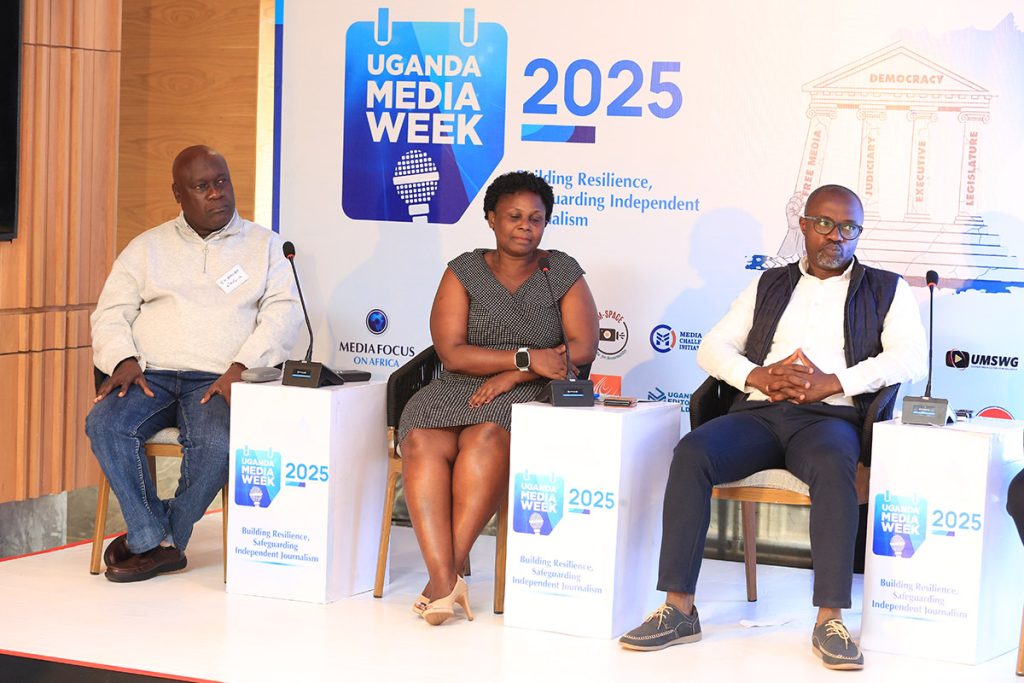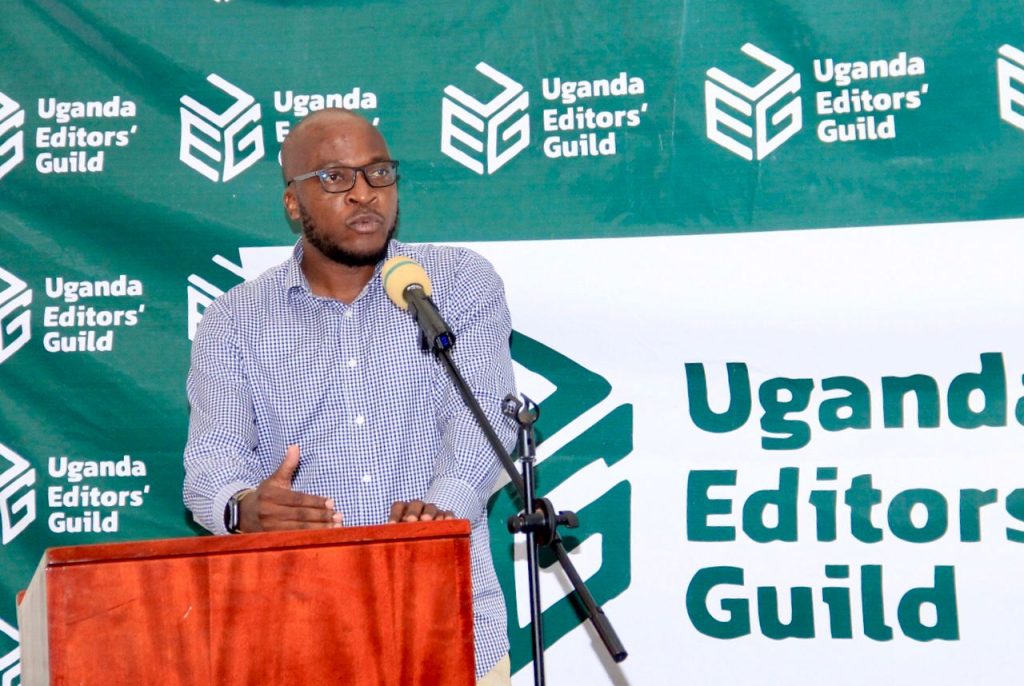
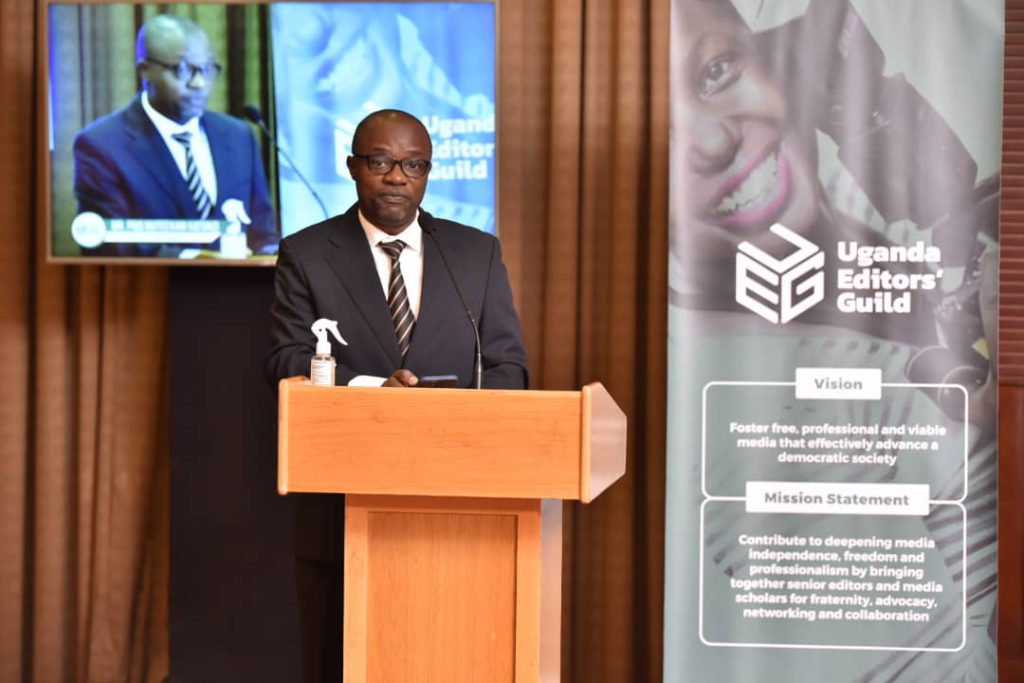
In an era of shrinking civic space, rising disinformation and increasing pressure on the media, journalism cannot defend accountability and citizens’ rights in isolation. It requires strong partnerships, collective voices and safe spaces for reflection and strategy.
Every year since 2021, Uganda editors guild holds an annual convention where editors and media stakeholders come together to dialogue on major issues affecting the Ugandan media.
Held under the Media Support for Public Accountability and Civic Engagement in Uganda (M-SPACE) project, Editors Convention 2025 was more than an annual gathering. It was a deliberate intervention to strengthen the media’s role as a pillar of accountability, a catalyst for civic engagement and a defender of rights—especially as Uganda heads toward the 2026 general elections.
A Convening Power for Accountability
At its core, the Convention reaffirmed the media’s public interest mandate. Bringing together over 60 editors from across Uganda, including Karamoja, West Nile, Northern Uganda and Kampala, the space enabled senior editorial decision-makers to interrogate the state of journalism, share lived experiences and identify collective responses to shared challenges.
By aligning with the PACER framework under M-SPACE, the Convention positioned editors not just as newsroom leaders, but as key accountability actors whose editorial choices shape public discourse, influence governance outcomes and enable citizens to engage meaningfully in democratic processes.
Partnerships that Matter
One of the Convention’s most significant impacts was the strengthening and creation of strategic partnerships—a core pillar of PACER.
Editors engaged directly with:
-
Regulators, including the Uganda Communications Commission (UCC)
-
Electoral authorities, notably the Uganda Electoral Commission (EC)
-
Media support organisations, such as ACME, URN and UMWA
-
Journalism trainers and financial institutions
These engagements moved beyond protocol. They laid foundations for collaboration rather than confrontation, particularly around election reporting, media regulation and journalist safety. The emerging relationship between UEG and the Electoral Commission, for example, opens pathways for structured engagement on election coverage training ahead of 2026—an essential step in safeguarding both credible journalism and citizens’ right to information.
Strengthening Civic Engagement through Editorial Leadership
Editors sit at a powerful intersection between information and public action. Through panels, roundtables and practical sessions, the Convention interrogated how editorial leadership can:
-
Counter disinformation and misinformation
-
Use data, AI and digital tools to deepen public interest journalism
-
Produce content that resonates with online audiences without sacrificing accuracy or ethics
These conversations directly support civic engagement, ensuring that citizens receive information that is not only timely and compelling, but also factual, contextual and empowering.
A key lesson emerging from the Convention was the urgent need for coordinated fact-checking mechanisms, particularly as election-related narratives intensify. This insight underscores the role of collective editorial action in protecting the integrity of public debate.
Rights, Safety and the Media Operating Environment
The Convention also addressed the rights and welfare of journalists—often an overlooked dimension of accountability. Discussions on financial literacy, insurance and professional well-being highlighted a growing recognition that sustainable journalism depends on secure, informed and protected practitioners.
An immediate outcome was a commitment to further engagement between journalists and financial institutions on financial literacy and insurance—small but meaningful steps toward strengthening journalists’ resilience in a hostile operating environment.
At an institutional level, the election of regional representatives into the UEG leadership strengthened the Guild’s national reach and inclusivity, ensuring that editors outside Kampala are better represented in advocacy, policy dialogue and capacity-building efforts.
From Dialogue to Collective Action
While challenges such as hybrid participation and technical disruptions were noted, the Convention demonstrated the value of adaptive, inclusive engagement spaces. More importantly, it generated clear follow-up actions:
-
Strengthening editor engagement in policy-making, particularly around the draft communications policy
-
Deepening collaboration with regulators and line ministries
-
Expanding the Guild’s role in election preparedness, journalist safety and capacity building
These outcomes reflect PACER’s emphasis on moving beyond dialogue to collective action for systemic change.
Why the Editors’ Convention Matters
The Editors’ Convention 2025 was not just an event—it was an accountability intervention. By convening editors, regulators, trainers and partners, it reinforced the media’s role in defending civic space, amplifying citizens’ voices and safeguarding democratic rights.
As Uganda approaches a critical electoral cycle, such platforms are indispensable. They remind us that accountability thrives where partnerships are strong, editorial voices are united, and journalism is supported to serve the public interest without fear or favour.