Beyond the Ballot: Progress, Pressure and the Unfinished Work of Election Journalism
Uganda’s media demonstrated resilience and innovation during the 2026 General Election, but persistent threats to journalist safety, public trust and editorial independence revealed how much work remains before the next electoral cycle.
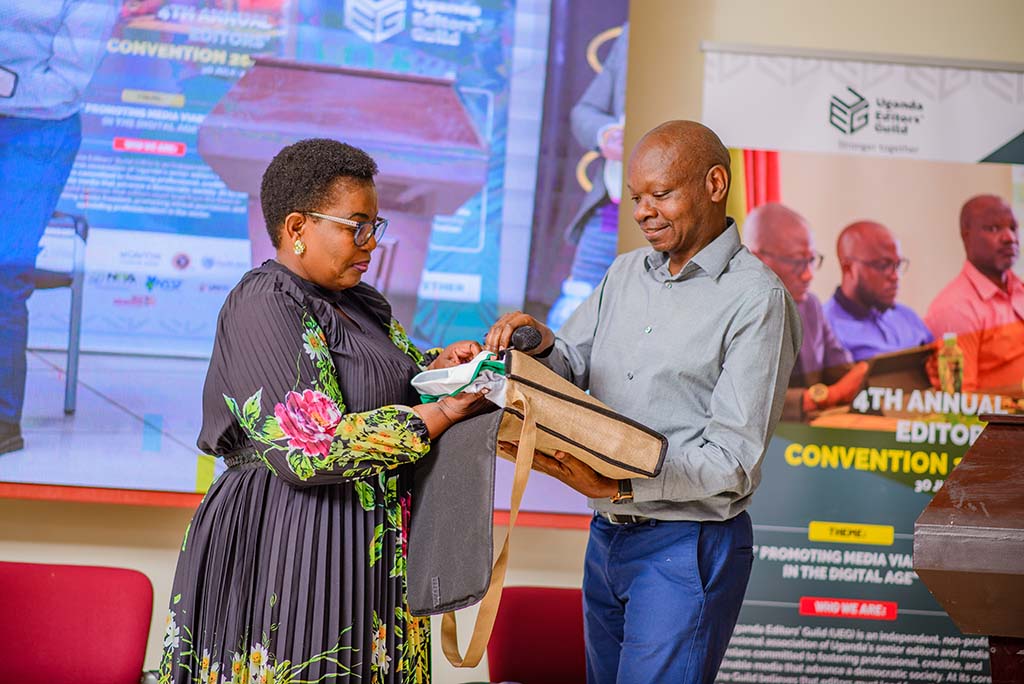
At the Fourth Annual Editors’ Convention that took place from 30th July to 2nd August in Jinja, editors reflected on how Uganda’s media performed during the 2026 General Election.
The session was informed by a keynote presentation from Alex Taremwa of the Aga Khan University Graduate School of Media and Communications.

During his keynote presentation, Mr. Taremwa highlighted that 2026 election took place in a difficult media environment marked by attacks on journalists, restrictions on information and disruption of digital communication.
“Between September 2025 and January 2026, several media professionals were reportedly attacked by law-enforcement officers or political activists. Journalists in different parts of the country encountered intimidation and violence while attempting to cover campaign activities.”
Journalism under pressure
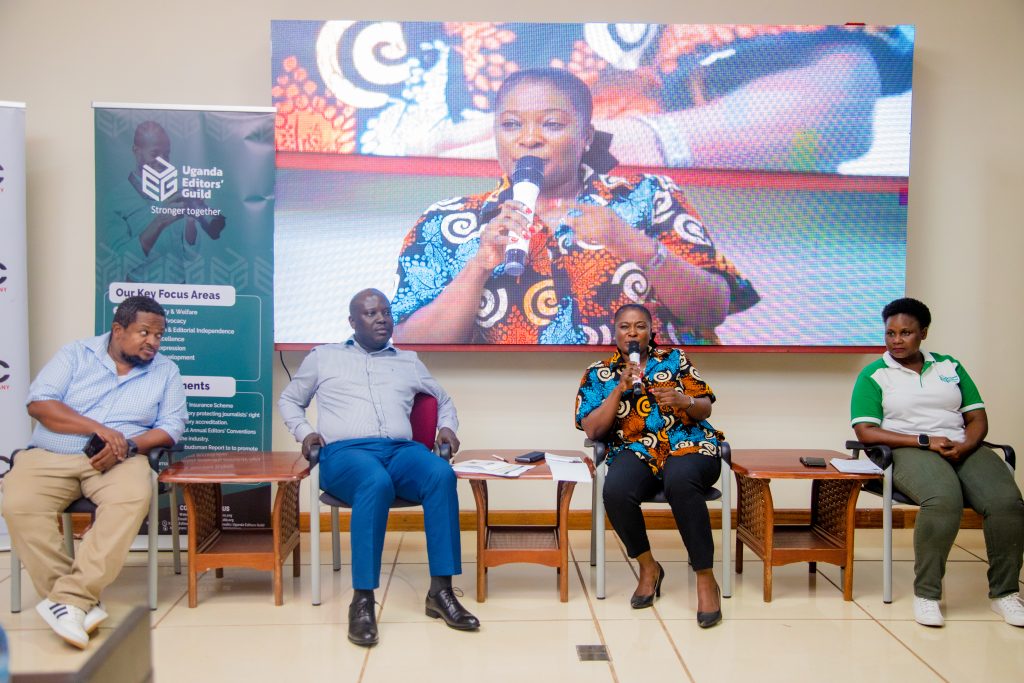
A panel discussion moderated by Gaaba Lakel Maria highlighted that the media also had to operate through an internet shutdown lasting more than 72 hours. The disruption affected communication between reporters and newsrooms, digital publication, audience access to information and systems established to support election coverage.
Juliet Nayiga of the Uganda Broadcasting Corporation explained that the shutdown affected call centres and the recording and transmission of information. Her experience demonstrated that even well-prepared newsrooms can be disrupted when essential communication systems become unavailable.
Election preparedness must therefore extend beyond assigning reporters and creating editorial schedules. Newsrooms need practical contingency plans for internet shutdowns, power interruptions, equipment failure, arrests and other emergencies.
Progress worth recognising
Despite the difficult environment, the Convention recognised several improvements in election coverage.
Newsrooms invested more strongly in candidate profiling, manifesto reporting, explainers, issue-based journalism and data storytelling. There was also greater use of multimedia and mobile storytelling as journalists adapted to changing audience habits.
Some media organisations provided reporters with helmets, protective jackets and other safety equipment. Access to counselling and psychological support also received greater attention, recognising that journalists covering violent or politically tense events may experience trauma and emotional distress.
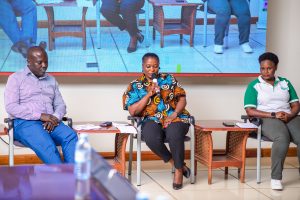
Sylvia Nankya, Editor-in-Chief of Uganda Radio Network, argued that the media deserved credit for continuing to report under extremely difficult circumstances. The ability of journalists to remain in the field and provide information to the public was itself an important achievement.
However, resilience should not become an excuse for repeatedly sending journalists into unsafe conditions. The courage of individual reporters must be supported by stronger institutional protection.
From campaign events to citizens’ concerns
One of the strongest messages from the session was the need to move beyond “horse-race” reporting.
Election coverage often concentrates on campaign crowds, political confrontations, candidate movements and the competition between leading presidential contenders. While these stories form part of the election, they do not always provide citizens with the information required to evaluate policies and make informed decisions.
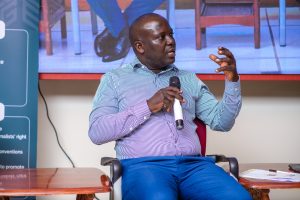
Francis Kagolo of Vision Group described how constituency-level research helped his organisation understand what communities wanted from their political leaders. This information supported the production of more issue-based stories and, in some cases, prompted political leaders to respond to concerns raised by communities.
Newsrooms were encouraged to invest more seriously in analysing manifestos. Reporting what a candidate has promised is not enough. Journalism must interrogate whether the proposals are realistic, how they would be financed and what they would mean for citizens in different parts of the country.
Community voices must also remain central. Election reporting should reflect the concerns of voters, not only the statements of candidates and political elites.
Representation remains unequal
The session also highlighted the persistent underrepresentation of women in political coverage.
According to findings cited during the keynote presentation, 85 per cent of sources used by radio stations in December 2025 were male. Men also dominated online, print and television coverage. Political talk shows frequently featured all-male panels, limiting the range of voices shaping public debate.
This imbalance cannot be explained only by the absence of a female presidential candidate. Editors determine who is invited to analyse policies, explain political developments and speak about the priorities of communities.
Improving gender representation will therefore require deliberate editorial intervention. Newsrooms must expand their databases of women experts, political actors, community leaders and analysts instead of repeatedly returning to the same familiar male voices.
The battle for digital audiences
The election also demonstrated how quickly political communication is changing.
Candidates increasingly relied on their own social-media teams, YouTube channels and accounts on platforms such as X and TikTok to communicate directly with voters. In some cases, journalists seeking information were referred to candidates’ digital platforms rather than being granted interviews.
At the same time, content creators attracted audiences and commercial opportunities that might previously have gone to established media organisations.
This does not mean that professional journalism has become irrelevant. It means that newsrooms must demonstrate their distinct value through verification, context, analysis and accountability.
Media houses must intentionally design election content for mobile audiences. Long reports can be repackaged into short videos, explainers, visualisations, podcasts, interactive tools and other accessible formats without compromising accuracy or depth.
Artificial intelligence also presents opportunities in transcription, translation, data analysis, fact-checking support, audience monitoring and the production of election dashboards. However, its use must remain subject to human editorial oversight.
The trust question
Election journalism depends heavily on public confidence. Audiences must believe that the information they receive is accurate, balanced and produced independently.
Concerns were raised during the Convention about unequal candidate coverage, political activism within newsrooms and inconsistencies in the presentation of election information. When audiences perceive media organisations as extensions of political interests, journalism loses both trust and influence.
Editors must therefore protect the distinction between journalists’ personal political beliefs and their professional responsibilities. They must also strengthen verification, correct mistakes transparently and explain how important editorial decisions are made.
Trust is not rebuilt through slogans. It is earned through consistent professional conduct.
The next election starts now
The most important lesson from the session was that election preparation cannot begin a few weeks before polling day.
Newsrooms should begin strengthening their systems now by:
- Institutionalising continuous election training for reporters, editors and newsroom managers.
- Establishing contingency plans for internet shutdowns and other communication disruptions.
- Strengthening physical, digital and psychological protection for journalists.
- Investing in audience research and mobile-first journalism.
- Improving manifesto analysis and community-centred reporting.
- Deliberately expanding women’s participation and diversifying expert sources.
- Developing responsible policies for the use of artificial intelligence.
- Reinforcing professionalism, verification and political neutrality.
- Building stronger collaboration across media organisations when journalists and press freedom come under threat.
The 2026 election showed that Uganda’s media can innovate and remain resilient under considerable pressure. But courage and improvisation cannot substitute for institutional preparation.
The unfinished work now belongs to editors, newsroom managers, media owners and professional associations. The next election cycle has already begun—not on the campaign trail, but in the decisions newsrooms make today.
Read also: https://www.ugandaeditorsguild.org/blogs/beyond-the-newsroom-why-audiences-hold-the-key-to-media-survival/