Hon. Lumumba Calls for Stronger Media–Government Dialogue and Responsible Journalism
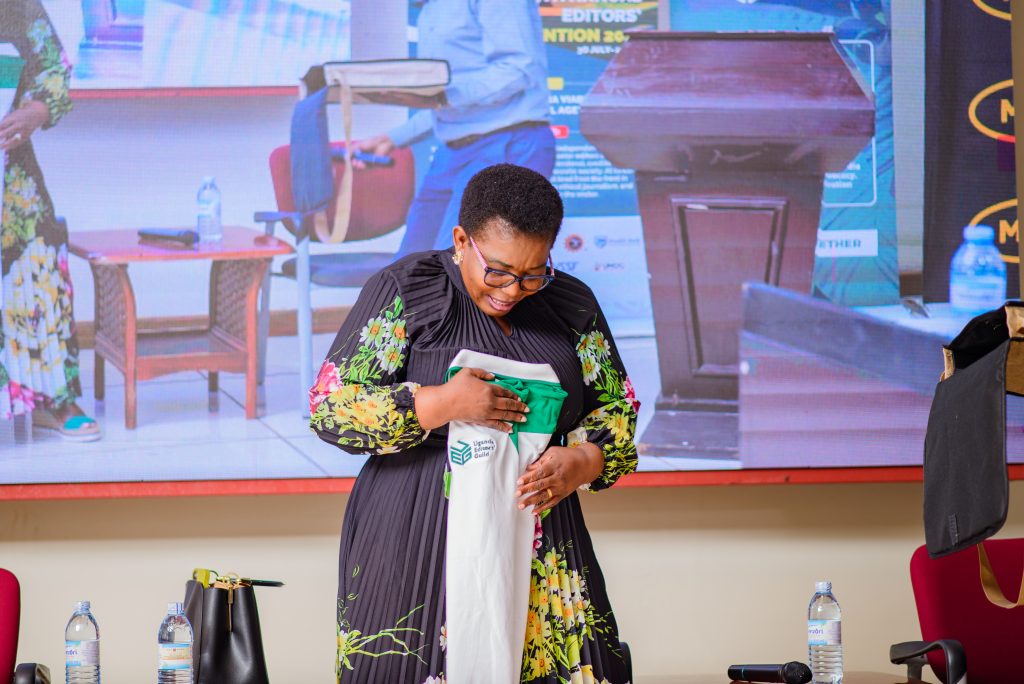
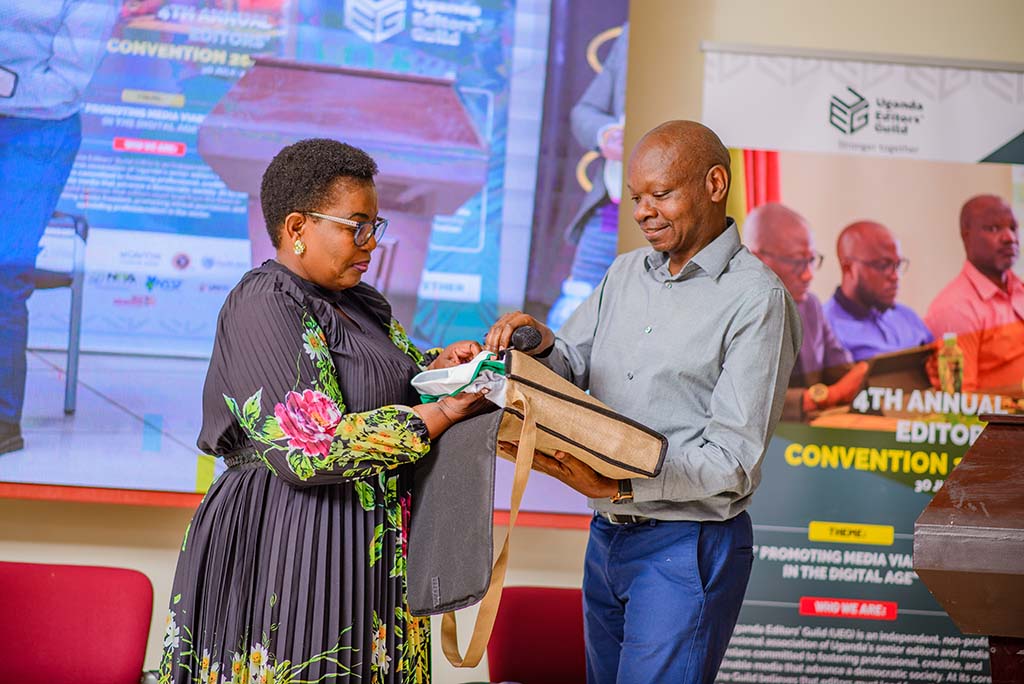
Minister of ICT and National Guidance, Hon. Justine Kasule Lumumba, has called for more regular and constructive engagement between the government and the media to address emerging challenges without resorting to confrontation or media closures.
Speaking as Chief Guest at the 4th Annual Editors’ Convention, Hon. Lumumba said the media remains an indispensable partner in Uganda’s development because of its role in informing citizens, scrutinising public affairs and communicating government programmes.
She commended the Uganda Editors’ Guild for creating a platform where editors, government officials and other stakeholders can openly discuss issues affecting journalism and the wider information sector. However, she urged the Guild to publicise the Convention more widely so that additional stakeholders can understand its purpose and participate in its activities.
The Minister acknowledged the media’s contribution to public awareness of government initiatives, citing the Parish Development Model as one programme whose implementation has benefited from media coverage.
She also highlighted the value of giving journalists opportunities to witness and understand complex developments beyond official statements and newsroom discussions. Referring to journalists’ field visits to Uganda’s oil and gas projects, Hon. Lumumba observed that exposure to the realities on the ground had influenced how some journalists subsequently reported on the sector.
According to the Minister, informed reporting helped change aspects of the public narrative around the oil industry and contributed to an environment that was more favourable to investment.
Journalism requires editorial judgement
A significant part of Hon. Lumumba’s address focused on the responsibility of editors and broadcasters to exercise sound judgement when selecting, framing and positioning stories.
She raised concern about radio programmes that repeatedly target particular individuals or provide platforms for guests to use offensive and potentially damaging language. She challenged editors to consider the consequences of turning such statements into prominent headlines or lead stories.
The Minister made a similar appeal regarding coverage of sensitive public health matters. Citing reports about Ebola cases in communities in the Democratic Republic of Congo, she urged the media to avoid sensationalism and carefully assess how such information should be presented.
Her argument was not that difficult or sensitive issues should be ignored, but that editors must consider context, proportionality and the possible public consequences of their decisions.
Hon. Lumumba also called for greater protection of children’s privacy. She questioned the practice of publishing photographs and personal information about pupils who perform well under Universal Primary Education and Universal Secondary Education programmes without adequately considering the risks associated with exposing them.
She urged the media to help citizens understand why children’s privacy must be protected, even when the coverage appears celebratory.
The Minister further challenged journalists to reconsider how they approach people who have lost relatives. While acknowledging the public’s right to information, she asked media practitioners to balance this responsibility with the dignity, privacy and emotional wellbeing of grieving individuals and families.
Fairness in election coverage
Turning to political reporting, Hon. Lumumba called for greater reflection on how media organisations allocate airtime to candidates during election campaigns.
She said editors, government institutions and other stakeholders should explore mechanisms that promote access to accurate information while preserving journalists’ professional and editorial independence.
The media’s influence over public debate, she noted, makes fairness particularly important during elections. Citizens require balanced and credible information to assess candidates, understand competing political positions and make informed decisions.
Her remarks reinforced one of the Convention’s central concerns: how newsrooms can maintain professional standards and public trust while operating within an increasingly polarised political environment.
“Everyone with a phone is a journalist”
Hon. Lumumba also addressed the disruption created by social media and citizen-generated content.
She described the current information environment as one in which “everyone with a phone is a journalist,” noting that people can record events, comment on them and distribute information instantly, including in local languages, without necessarily observing professional journalistic standards.
While digital platforms have expanded citizens’ ability to participate in public conversations, the Minister said they have also increased the circulation of misinformation and content that may undermine national values.
She challenged government, media organisations and other stakeholders to identify practical ways of responding to misinformation while strengthening the ability of professional journalists to provide reliable and accountable information.
In an environment where almost anyone can produce and distribute content, she argued, trained journalists must demonstrate the value of verification, accuracy, fairness and accountability.
Dialogue instead of media closures
The Minister called for a media–government relationship built on continuous engagement rather than confrontation.
She said disagreements should not be allowed to escalate to the point of closing media organisations, adding that such outcomes could be avoided through timely dialogue.
However, she also challenged media organisations to reflect on how they respond when government officials raise concerns about their reporting. She asked whether media institutions listen and engage with complaints or simply continue with the same practices without examining the issues raised.
Hon. Lumumba acknowledged that the relationship between government and the media is difficult for both sides. Sustainable solutions, she said, would therefore have to be developed jointly rather than imposed by either party.
Preparing journalism for artificial intelligence
The Minister also urged the media industry to prepare for the growing influence of artificial intelligence on journalism and public communication.
She informed participants that the government was developing an AI policy but questioned whether media organisations would be ready to comply with and effectively implement the emerging requirements.
Beyond regulatory compliance, she encouraged editors to examine what technological change means for journalism’s identity and future. The rapid expansion of smartphones, AI tools and digital publishing platforms has weakened the media’s traditional control over the production and distribution of information.
Professional journalists must therefore protect the integrity of their work by upholding standards that distinguish journalism from unverified online content.
Hon. Lumumba also linked the profession’s future to the welfare of media practitioners. She encouraged journalists and media organisations to examine how existing government interventions could contribute to their welfare and professional sustainability.
Proposal for two engagements every year
As part of efforts to improve relations between the media and government, Hon. Lumumba proposed increasing the frequency of the Editors’ Convention from once to twice a year.
She suggested that one engagement could be supported by the media sector and another by the government, creating more regular opportunities to discuss challenges affecting journalism, technology, governance and public information.
More frequent dialogue, she said, would enable stakeholders to address disagreements and emerging concerns before they escalate.
Her address ultimately placed responsibility on both government and the media. Government must remain open to engagement and avoid actions that unnecessarily restrict journalism, while media practitioners must uphold accuracy, fairness, privacy, dignity and responsible editorial judgement.
As technological disruption transforms the information environment, the Minister’s message to editors was clear: journalism will retain its relevance only by demonstrating the professional standards and public value that distinguish it from the growing volume of content produced by “everyone with a phone.”