Safer Newsrooms Cannot Wait: Confronting Sexual Harassment in Uganda’s Media
Sexual harassment in Uganda’s media workplaces has declined over the past five years, but new findings show that verbal, online and physical abuse remain widespread. Editors and media managers are being challenged to move beyond informal responses and build workplaces where prevention, reporting and accountability are institutional responsibilities.
For many journalists, the newsroom is more than a place of work. It is where careers begin, professional relationships are built and important public-interest stories take shape. But for some media professionals, the same workplace can become a source of intimidation, exploitation and abuse.
Sexual comments may be dismissed as jokes. Unwanted messages may continue after working hours. An intern may hesitate to report a senior colleague who controls assignments and career opportunities. A journalist who experiences physical harassment may remain silent because the newsroom lacks a confidential and trusted reporting mechanism.
Findings presented at the 4th Annual Editors’ Convention showed that these experiences are neither isolated nor limited to one gender. Sexual harassment remains a serious workplace-safety and organisational-culture problem in media organisations globally, across Sub-Saharan Africa and in Uganda.
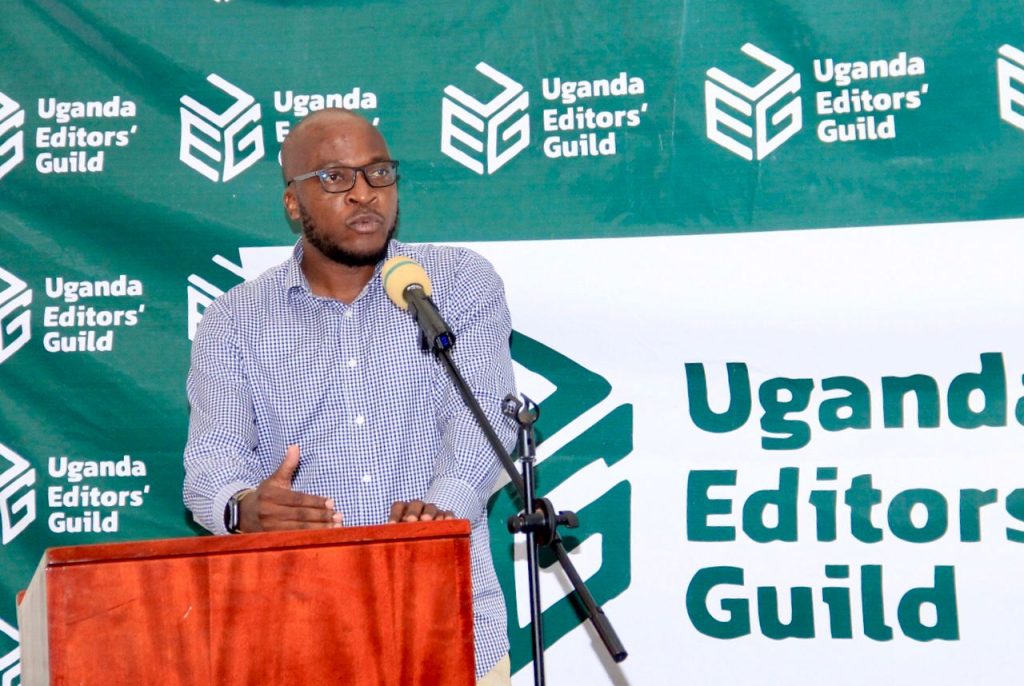
Presenting findings from WAN-IFRA Women in News, Carolyne Nakazibwe said women continue to be disproportionately affected across most forms of sexual harassment.

The research drew responses from more than 2,800 media employees working in journalism, production, administration, human resources, marketing and management.
Globally, 29 per cent of respondents reported experiencing sexual harassment. Verbal sexual harassment was the most commonly reported form, affecting 45 per cent of all respondents.
Nearly 60 per cent of women reported experiencing verbal sexual harassment, compared with 25 per cent of men. This made women approximately 2.4 times more likely than men to experience it.
The figures demonstrate that sexual harassment is not simply a matter of individual misconduct. It is a systemic workplace concern requiring prevention, trusted reporting channels and organisational accountability.



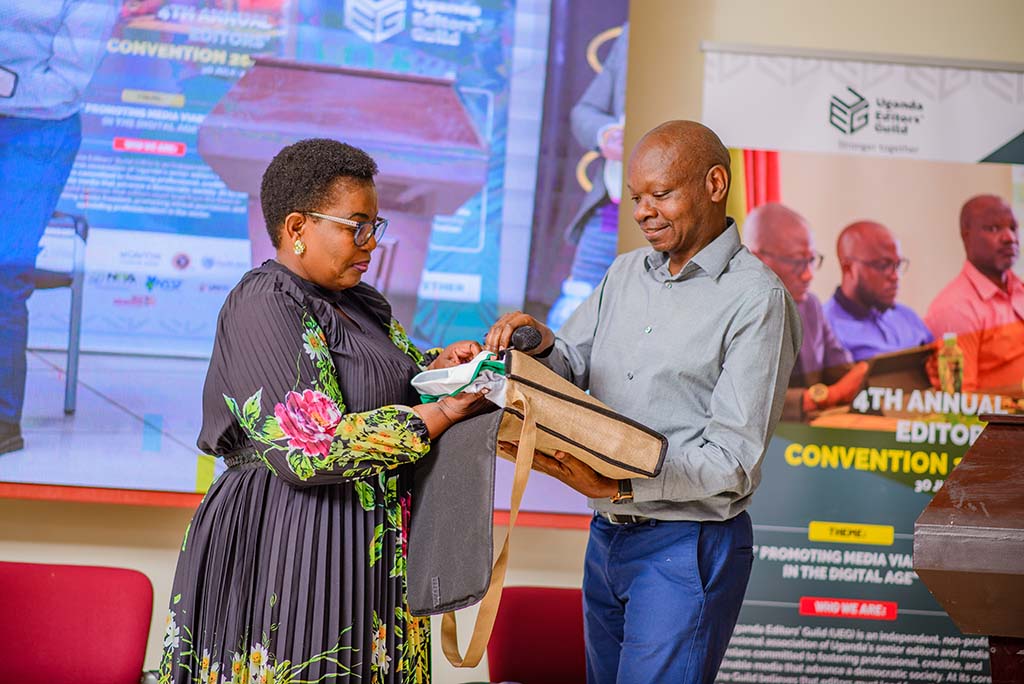
 Editors from across the country during the 4th Annual Editors Convention at Nile Resort Hotel in Jinja from 30th to 2nd August.
A serious concern across African media
The findings from Sub-Saharan Africa revealed an even more troubling picture.
More than half—52 per cent—of respondents reported experiencing verbal sexual harassment. This included 68 per cent of women and 32 per cent of men.
Online sexual harassment affected 42 per cent of respondents, with women again reporting higher exposure: 49 per cent compared with 33 per cent of men.
Physical sexual harassment was reported by 30 per cent of respondents across the region. It affected 37 per cent of women and 19 per cent of men.
Most concerningly, six per cent of respondents reported experiencing rape.
These figures point to risks that extend beyond inappropriate language or uncomfortable interactions. They include serious violations with potentially long-term physical, psychological and professional consequences.
The findings also show that harassment follows media professionals beyond the physical newsroom. Journalists now work across email, messaging applications and social-media platforms, creating additional spaces in which sexualised comments, threats, unwanted images and persistent advances can occur.
A newsroom’s responsibility for safety must therefore extend to the digital spaces in which its employees perform their work.
Verbal harassment remains widespread in Uganda
The Uganda findings reflected many of the same gender disparities.
Verbal sexual harassment was the most commonly reported form among both women and men. Seventy-seven per cent of women said they had experienced it at least once, compared with 45 per cent of men.
For many women, the experience was not a one-time incident. Forty per cent reported experiencing verbal sexual harassment five or more times, compared with 18 per cent of men.
The recurrence is significant. It suggests that harassment may become normalised within a workplace, particularly when inappropriate comments and behaviour are ignored, minimised or treated as part of newsroom culture.
Verbal harassment may include unwanted sexual remarks, suggestive comments, repeated advances and other conduct that creates an intimidating or humiliating work environment.
When such behaviour goes unchallenged, it sends a message that the newsroom will tolerate misconduct. This can discourage those affected from reporting and embolden perpetrators to continue.
Harassment has moved online
Digital platforms have become essential to journalism, but they have also created new opportunities for abuse.
In Uganda, 56 per cent of women reported experiencing online sexual harassment, compared with 46 per cent of men.
Nineteen per cent of women said they had experienced it five or more times. Among men, the proportion reporting repeated online sexual harassment was even higher, at 23 per cent.
The findings demonstrate that men can also be targets of sexual harassment and should be able to report their experiences without ridicule, stigma or assumptions about masculinity.
Online sexual harassment may occur through private messages, workplace communication platforms, email or social media. It can include sexual advances, unwanted images, invasive questions, threats and the circulation of sexualised content.
Because journalists’ work frequently requires a visible online presence, completely withdrawing from digital platforms may not be a realistic option. Media organisations must therefore develop procedures for documenting and responding to online abuse connected to an employee’s work.
Physical harassment and reported rape
Physical sexual harassment was reported by 47 per cent of female respondents and 34 per cent of male respondents in Uganda.
The study also recorded reported experiences of rape among media professionals. Four per cent of the 116 female respondents and nine per cent of the 89 male respondents reported experiencing rape. Three per cent of the male respondents reported experiencing it five or more times.
These findings must be approached with seriousness and sensitivity. They represent reported experiences of grave sexual violence, not merely workplace disagreements.
Media organisations need survivor-centred procedures that protect confidentiality, prevent retaliation and connect affected employees to appropriate medical, psychosocial and legal support.
Complaints involving possible criminal conduct should not be treated solely as internal human-resource matters. Survivors should receive clear information about their options and be supported in making their own informed decisions about further action.
Progress—but the problem remains substantial
The research recorded an encouraging decline in the overall prevalence of workplace sexual harassment in Uganda, from 53 per cent to 40 per cent over five years.
The reduction suggests that awareness, workplace interventions and public discussion may be producing change.
However, 40 per cent is still equivalent to two in every five media professionals. Progress should therefore not be interpreted as evidence that the problem has been resolved.
A decline in prevalence is meaningful only if it motivates media organisations to strengthen the measures that are working, identify the gaps that remain and sustain attention to the issue.
The findings demand more than public commitments. They require practical systems that employees can trust.
Interns and new entrants face particular vulnerability
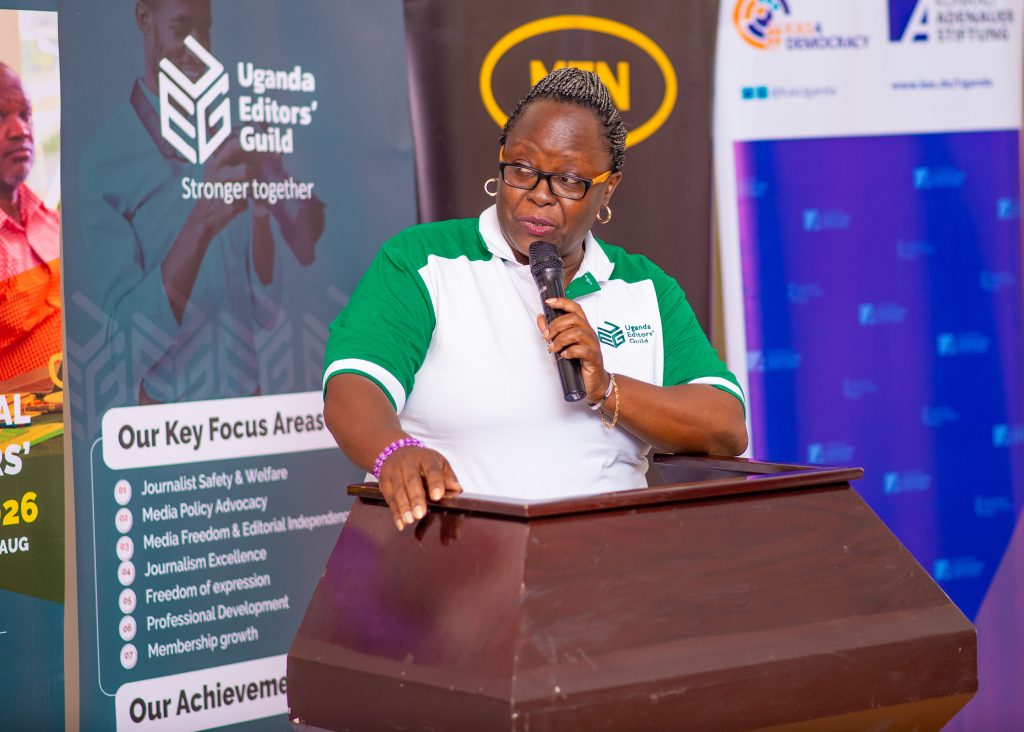
During a panel discussion following the presentation, CBS Editor Esther Wamala urged media organisations to pay particular attention to interns and new entrants.
Young journalists may enter newsrooms with limited experience, little understanding of institutional procedures and a strong desire to secure assignments or employment.
Their dependence on senior colleagues for mentorship, recommendations and career opportunities can expose them to exploitation. They may fear that rejecting an advance or reporting misconduct will affect their assessment, access to assignments or prospects of being retained.
While young professionals should receive guidance on recognising and reporting inappropriate behaviour, responsibility must not be placed on them to avoid being harassed.
Media organisations are responsible for creating safe internship programmes, setting clear professional boundaries and ensuring that supervisors do not abuse positions of authority.
Interns should be told, from the beginning of their placement, what conduct is prohibited, where they can report concerns and how the organisation will protect them from retaliation.
Editors shape newsroom culture
Former Vision Group Editor-in-Chief Barbara Kaija emphasised the responsibility of media organisations to ensure that journalists can perform their duties without exposure to harassment and other forms of workplace abuse.
Abalo Irene similarly called on editors to provide visionary leadership and take proactive steps to prevent harassment and respond appropriately when cases are reported.
Editors influence newsroom culture through what they challenge, what they overlook and how they respond when concerns are raised.
A policy displayed on an office wall will have little value if senior employees are protected from accountability, complaints are discussed casually or those who report harassment lose assignments and opportunities.
Leadership must be visible and consistent. Editors and managers should communicate that sexual harassment is unacceptable regardless of the position, influence or performance of the alleged perpetrator.
They must also ensure that investigations are fair, confidential and timely, respecting both the rights of complainants and due process.
Reporting mechanisms must be trusted
Simba FM Editor Dick Nvule called for clear, accessible and effective mechanisms for handling sexual-harassment allegations.
He also encouraged men who experience harassment to speak out, noting that the issue should not be treated as affecting women alone.
Employees are unlikely to report when they do not know where to go, fear exposure or believe that nothing will happen.
A credible reporting system should provide more than one channel. Requiring every complaint to pass through a direct supervisor can silence employees when that supervisor is involved or closely connected to the alleged perpetrator.
Newsrooms could provide access to a designated safeguarding officer, trained human-resources personnel, a confidential reporting line or an independent external mechanism.
Employees should know how a complaint will be handled, who will have access to the information and what protection is available against retaliation.
What newsrooms must do
The Convention session pointed to several practical priorities for media organisations:
- Adopt and enforce a clear sexual-harassment and safeguarding policy covering verbal, physical and online conduct.
- Provide confidential and accessible reporting channels outside normal supervisory structures.
- Protect complainants, witnesses and survivors from retaliation.
- Train editors, managers, employees, freelancers and interns on prohibited conduct and reporting procedures.
- Establish clear professional boundaries between supervisors, mentors, interns and junior employees.
- Investigate complaints promptly, fairly and confidentially.
- Provide access to psychosocial, medical and legal support where required.
- Include online harassment in workplace-safety policies.
- Collect anonymised information to assess patterns and monitor whether interventions are working.
- Hold perpetrators accountable regardless of their seniority, influence or value to the organisation.
Safety is essential to media viability
Sexual harassment affects more than the individuals who experience it.
It can push talented journalists out of the profession, reduce productivity, damage mental and physical health, expose organisations to legal and reputational risk, and weaken trust within newsrooms.
A media organisation cannot claim to defend journalists in public while failing to protect them inside its own workplace.
The findings presented by WAN-IFRA show that Uganda has made progress, but the prevalence and recurrence of harassment remain too high.
Safer newsrooms will not be created by urging those at risk to be more careful. They will be created when editors and media owners establish clear standards, make reporting safe and ensure that misconduct has consequences.
The responsibility belongs to the institution—and it begins with leadership.