The Sovereignty Act: Prepare, Coordinate and Defend Editorial Space
The Protection of Sovereignty Act, 2026 could expose Uganda’s media to greater legal uncertainty, financial pressure and regulatory scrutiny. Editors and newsroom leaders were urged at the 4th Annual Editors’ Convention to understand the law, strengthen editorial safeguards and coordinate their response before enforcement begins.
For Uganda’s newsrooms, the risks posed by the Protection of Sovereignty Act, 2026 may not begin with a conviction.
They could begin with an investigation, a demand for information, the interrogation of a journalist, increased surveillance or a prolonged legal process that drains a media organisation’s already limited resources.
Even where an editor or journalist is eventually acquitted, the cost of defending the case—and the disruption caused to the newsroom could be significant.
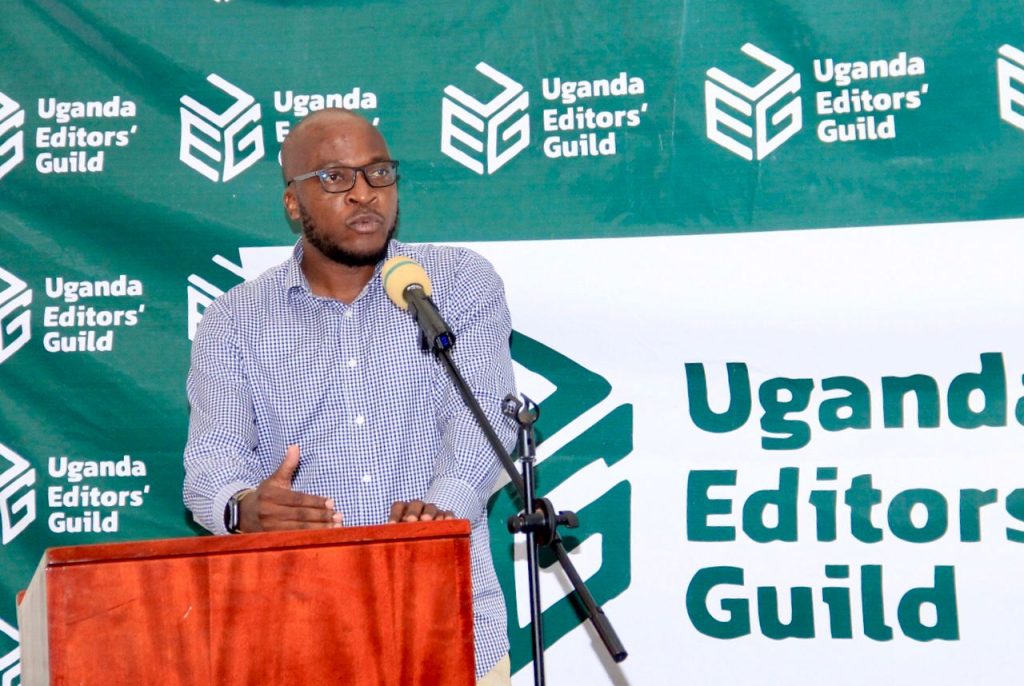
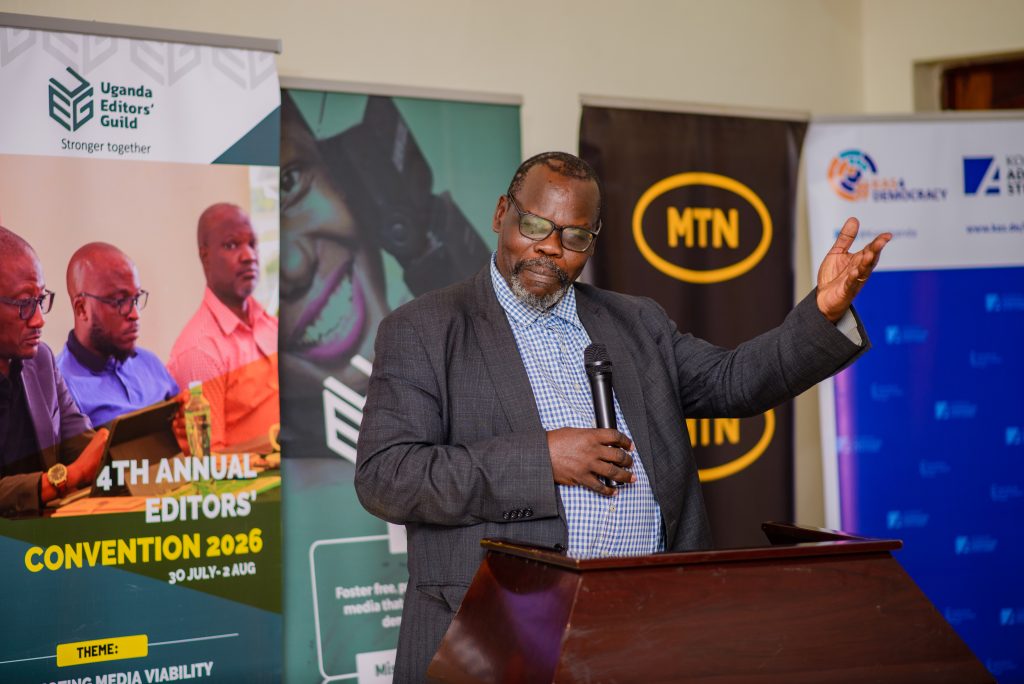
This warning emerged during a session on the impact of the Sovereignty Act on media and media practice at the 4th Annual Editors’ Convention held from 30th to 2nd August 2026 in Jinja.
The discussion brought together editors, media scholars and lawyers to examine how the legislation could affect editorial independence, source protection, foreign funding and the wider operating environment for journalism in Uganda.
Delivering the keynote presentation, Dr Henry Onoria described the Act as a significant shift in the media’s regulatory environment, particularly because of its broad provisions on foreign funding, political and economic reporting, and activities considered to constitute undue external influence.
The central message from the session: newsrooms should not wait for the first journalist to be arrested or the first media organisation to face enforcement action before preparing a response.
Broad definitions, uncertain boundaries
One of the most pressing concerns raised during the session was the breadth and ambiguity of some of the Act’s provisions.
Onoria warned that vague definitions could expose journalists, editors and media houses to legal uncertainty and create a “chilling effect” on investigative and critical journalism.
News organisations need to pay particular attention to provisions relating to foreign influence, political activities, criticism of government programmes, civic education, interference with government operations and “economic sabotage.”
Where the boundaries of prohibited conduct are unclear, editors may become hesitant to approve stories on sensitive subjects—even where the reporting is accurate and serves the public interest.
This uncertainty could encourage self-censorship long before a case reaches court. A media house may avoid an investigation, soften a headline or abandon a public-interest story simply because it is unsure how the law will be interpreted.
Such caution would affect the media’s ability to hold power accountable and give citizens access to information necessary for informed public debate.
Economic reporting could carry greater risk
Section 13 of the Act, which addresses economic sabotage, attracted particular concern.
Onoria explained that although the provision requires proof that a person acted “knowingly,” phrases such as “false information,” “disruptive activity” and actions that weaken the country’s economic system remain open to interpretation.
This could create risks for journalists reporting on corruption, public health, national security, tourism, major investments and the performance of government programmes.
A report exposing failures in a public project or highlighting problems in a key economic sector could be interpreted by affected institutions as damaging Uganda’s economic interests. Investigative stories that influence investor confidence, tourism or public perceptions of government performance may consequently attract greater scrutiny.
The danger is not that journalists should stop reporting critically on Uganda’s economy. Rather, newsrooms must ensure that high-risk stories are supported by strong evidence, careful verification and clearly documented editorial decisions.
Could media houses be classified as foreign agents?
The Act’s treatment of foreign funding also raised serious questions for a media sector in which grants, partnerships and international support have become important sources of training, investigative funding and institutional development.
Angella Nampewo, Digital Editor at Nation Media Group, explained that her organisation’s initial response had focused on sensitising journalists and editors about the law’s potential dangers and implications.
However, she expressed concern that provisions relating to shareholding, sources of funding and political activity could bring media organisations within the law’s definition of “foreign agents.”
Many Ugandan media organisations work with international foundations, development agencies, journalism-support organisations and foreign media partners. These relationships may support investigative reporting, election coverage, fact-checking, journalist safety and professional training.
If such partnerships attract additional regulation or suspicion, the Act could discourage foreign investment and international cooperation. It could also limit the movement of media professionals and increase scrutiny of both organisations and individual journalists.
The result would be felt not only in editorial independence but also in the financial and operational sustainability of newsrooms.
Editorial independence and source protection
Increased regulatory scrutiny could also make it harder for journalists to protect confidential sources.
Lawyer Pheona Wall Nabasa, a former president of the Uganda Law Society, raised concerns about what she described as ministerial overreach in the Act. She warned that the legislation could place greater constraints on media houses, threaten editorial independence and weaken their ability to protect sources.
Source confidentiality is fundamental to investigative journalism. Whistle-blowers and other vulnerable sources often provide information only when they trust that their identities and communications will remain protected.
If journalists or media organisations face expanded reporting demands, surveillance or investigations into their activities, potential sources may become reluctant to communicate with the media.
Newsrooms must therefore treat digital security as part of their response to the Act. Secure communication, disciplined information storage and controlled access to sensitive material are essential to protecting both sources and journalists.
The legal process can become the punishment
Newsrooms must also prepare for the financial and operational consequences of enforcement.
Onoria cautioned that even when a journalist or editor is ultimately cleared, the process of investigation, interrogation and legal defence may itself impose a heavy burden.
Journalists may lose working days while responding to investigators or appearing in court. Editors may be required to produce records and explain decisions made during the reporting process. Media houses may incur substantial legal costs while simultaneously dealing with reputational and commercial pressure.
Smaller and independent newsrooms are particularly vulnerable because they may lack in-house legal counsel or funds for prolonged litigation.
Legal preparedness should therefore not begin after a summons has arrived. News organisations need to know which lawyer to contact, how staff should respond to regulatory requests and who is authorized to speak on behalf of the organisation.
Seven actions newsrooms should take now
The Convention session proposed several practical measures that editors and newsroom leaders can adopt.
1. Sensitise every journalist and editor
Newsrooms should conduct internal briefings on the Act, focusing on the provisions most likely to affect reporting, funding, partnerships and source protection.
The training should not be restricted to senior editors. Reporters, producers, digital teams, finance staff and managers should understand how their roles may be affected.
2. Strengthen verification and documentation
High-risk stories must be supported by strong documentary evidence and independently verified sources.
Editors should preserve records showing how information was obtained, what verification was conducted and why publication was considered to be in the public interest.
Documenting editorial decision-making can help demonstrate that the newsroom acted professionally and responsibly.
3. Provide a meaningful right of reply
Individuals and institutions affected by sensitive reporting should be given a reasonable opportunity to respond.
The request, response and any failure to respond should be documented. A right of reply strengthens fairness and may become important evidence if the story is later challenged.
4. Introduce legal and compliance reviews
Sensitive investigations—particularly those involving national security, foreign funding, major public projects or alleged economic harm—should undergo legal review before publication.
Legal review should help the newsroom understand and manage risk without allowing fear of litigation to replace editorial judgement.
5. Audit funding and partnerships
Media organisations should understand the source, purpose and conditions of every grant, partnership and external funding arrangement.
Newsrooms should maintain accurate records, monitor any thresholds or report obligations established under the Act and ensure that funding agreements protect editorial independence.
6. Strengthen digital and source security
Newsrooms should review who has access to sensitive documents, source identities and internal communication platforms.
Journalists working on high-risk stories need secure communication channels and clear procedures for storing confidential information. Sensitive source information should not be circulated more widely than necessary.
7. Establish an enforcement-response protocol
Every media organisation should have a clear procedure for responding to regulatory visits, information requests, summonses, arrests or the questioning of journalists.
The protocol should identify legal contacts, internal decision-makers, documentation procedures and communication responsibilities.
The industry cannot respond newsroom by newsroom
While internal preparation is necessary, participants stressed that individual news organisations cannot adequately respond to the Act on their own.
Dr Adolf Mbaine called for collective self-organisation among journalists, lawyers and other stakeholders. He argued that challenging problematic laws as individuals has become increasingly difficult, making a unified professional response essential.
The Convention recommended that the Uganda Editors’ Guild coordinate a legal defence fund to support independent journalists and media organisations facing enforcement action under the Act.
It also proposed an industry-wide compliance manual explaining how news organisations should track funding thresholds, respond to reporting requirements and engage regulators without surrendering editorial integrity.
Such coordination could prevent inconsistent responses, reduce duplication and ensure that smaller newsrooms are not left without legal or technical support.
The industry was also encouraged to maintain engagement “under protest” with the Ministry of Internal Affairs while supporting active constitutional challenges to the law.
Legal challenge remains an option
The panel did not present the Act as legally unchallengeable.
Lawyer Jude Byamukama pointed to the legislation’s lack of precision as a possible basis for legal scrutiny. Lawyer Catherine Anite similarly argued that previous court decisions could provide useful precedents for contesting vague or restrictive provisions.
Onoria referred to cases including Charles Onyango-Obbo and Another v Attorney General and Andrew Mwenda and Another v Attorney General, in which Uganda’s courts addressed vague criminal provisions that restricted freedom of expression.
Nabasa argued that stakeholders do not necessarily have to wait for the law to take effect before seeking judicial intervention.
However, editors were cautioned against assuming that constitutional litigation would immediately remove the risks. Court cases may take time, and the law could create operational pressure while legal challenges remain unresolved.
Preparation and litigation must therefore proceed together.
Defending journalism in the public interest
The session also highlighted the need to explain why independent journalism matters.
Media organisations receiving external support may be portrayed as advancing foreign interests, yet much of the work financed through journalism partnerships serves Ugandan citizens. It includes investigations into corruption, election reporting, fact-checking, civic education, safety training and coverage of underreported communities.
The Convention proposed a public campaign showing that independent journalism contributes to national transparency and economic accountability rather than automatically serving “foreign” interests.
Defending editorial space will require more than statements issued after a journalist is arrested. It will require public understanding, internal preparation, legal coordination and solidarity across the media industry.
The Sovereignty Act presents serious questions for the future of journalism in Uganda. Its full impact will depend partly on how its provisions are interpreted and enforced.
But newsrooms do not have to wait passively for those answers.
They can prepare their journalists, strengthen verification, protect their sources, examine their funding arrangements and coordinate legal support.
The task ahead is threefold: prepare, coordinate and defend editorial space.